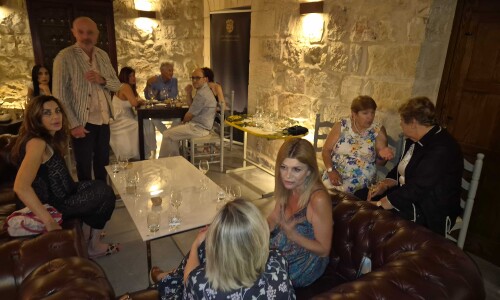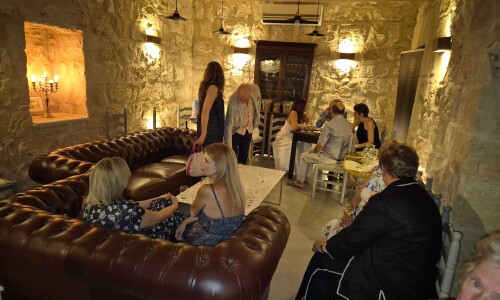
OMGD wine-tasting event at San Niklaw Winery on Saturday the 20th of June 2026
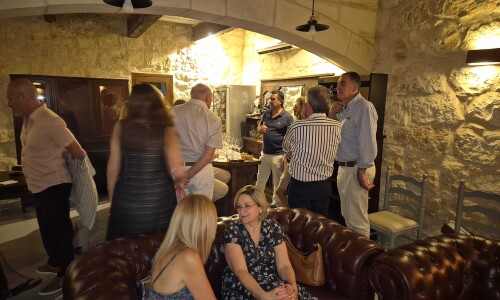
The OMGD event at San Niklaw Estate on Saturday 20th June was a quite a bit different from other events organised for Bailliage members in the past. Most of us have participated at wine tasting events, including a couple organised by the OMGD, however contrary to the very polished, controlled affairs of the past, this event, solely organised by our host who preferred not to involve us in the planning and execution of what was a much more laid back affair than expected. In fact, although arriving 30 minutes before the event as is my normal practice as the organiser to be able to work with our host on the details and progression of the event, I was asked to return at 8pm.
Surgeon John Cauchi’s tasting room was a very intimate and cosy place with guests able to move around and sit on the sofas, armchairs and chairs as John introduced us to the estate but unfortunately this only permitted those who were directly near him to hear his explanations and descriptions of his wines. Also, the wine pourings and food service was somewhat erratic, slow and a bit parsimonious. The pity was that the wines were good, some actually now unobtainable to buy, and the food, all prepared in house by the estate’s chef, was quite tasty and an interesting take on local dishes
The San Niklaw Estate was started by brothers John, Thomas and Jeremy Cauchi who took on their parents’ country residence and adjoining chapel dedicated to St Nicholas, with its surrounding land on the outskirts of Żejtun and came up with the idea of enhancing the value of their estate and the surrounding environment by stimulating the dormant land to cultivate their own vines after selecting what they were advised were the best vine clones for San Niklaw Estate’s terroir.
This selection consisted of four types of vines to produce 4 different wines. John started the tasting with their Vermentino based white wine Neptunus, named after his family’s coat of arms, Vermentino vines have hardy leaves and so should be resilient to the south-east wind and salty sea breezes from the nearby sea in Marsaxlokk. They produce a light-skinned wine grape which has a distinct luscious aroma of apples.
When the grapes are finally ready for harvest, they are all picked on the same day, the stems removed by machine and then pressed with only the white grape juice going into the tanks, which after fermentation is over, are sealed and the wine permitted to rest on its lees till the next spring when the wine is bottled and sold.
This white wine made solely from Vermentino showed how suitable this grape is for Malta’s hot and salty terroir – something I have long believed since first tasting a Maltese Vermentino which happened to be produced by Camilleri wines who still produce very decent and good value whites from this grape.
Despite having a few years of bottle age, it showed the expected tropical fruit flavours and a good acidity making it a good match both as an aperitif as well as a food wine. This wine is hard to find outside a restaurant being out of stock almost everywhere, last sold at €34.00
The next wine presented and tasted was the Sangiovese called Despatch named after the ship bearing this name which in the 19th century belonged to the family and was used to transport cotton harvested from their fields in order to be traded in Marseilles and Barcelona.
John explained that although Sangiovese is a grape variety coming from Tuscany that may have warm, even sometimes hot days but usually followed by cool nights that give the vines respite from the heat - something that rarely happens in Malta – his family has managed to grow this successfully by ensuring that the vines have all the water they want through well planned and controlled irrigation. The wine was quite a mature vintage, a 2008, which is currently for sale at Kontrada Wine merchants for €125.00. It presented with aromas and flavours of strawberry and spice, at this age with quite soft and elegant tannins.
The third wine was the Syrah based one called Contrada ta Fangu, this was a 2016, the same wine that had come first out of the 4 top Maltese Syrah based wines in April’s Qatra Wine Club blind tasting dinner. Syrah is another grape which does well in Malta and practically all Maltese wine makers produce wines from this grape. As can be expected from a warm weather Syrah, the wine was full-bodied as can be expected from such dark-skinned grapes with aromas of blackberry, mint and black pepper and dark fruit flavours. This wine can be found at a number of local wine merchants at the relatively low price of € 47.00.
The final wine of the evening was a Mourvèdre based one called Kappella San Nicola. This wine is the smallest volume produced by San Niklaw estate and currently is out of stock as well at local wine merchants, last costing €62.00. Mourvèdre vines are more troublesome, needing very warm weather, a low leaf-to-fruit ratio and much more care, since they are susceptible to many viticulture problems. However, their red grapes produce very interesting wines of a ruby colour and with unusual truffle and earthy notes.
All the red grapes are fermented, after pressing, with their skins, after the stems have been removed by machine, and after fermentation they are aged in new and pre-used barrels made of French oak and rested in the winery cellar.
Estate San Niklaw wines are a good example of the type of high quality wines Maltese winemakers have been able to produce through hard work, modern techniques and skilled winemaking in the vineyard and in the cellar especially in mitigating the significant hurdles to fine wine making all makers of good wine have in Malta because of the increasing heat and paucity of rain. This leap in quality is being more and more acknowledged by local and foreign wine writers and high level restaurants who added them to their wine lists.
Dr R. Cali-Corleo
Echanson, Bailliage de Malte